What to do in Pérouges?
What to do in Pérouges? The complete guide to visiting the medieval town and its surroundings!
Among the most iconic medieval villages in France, Pérouges stands out in many ways: its architectural charm, its period buildings, its hilltop location, its proximity to Lyon, its ideal weekend getaway… all these factors confirm that the medieval village of Pérouges is a must-see in the Auvergne-Rhône-Alpes region! But what exactly is there to do in this town?
A little history about Pérouges!
Perched on a hill in the Ain department, Pérouges has ancient roots: the site was inhabited as early as Antiquity, but the town as we know it today took shape in the Middle Ages. The first documented records date back to the 12th century; in the 13th century, the town acquired a fortified wall and a compact urban plan, which still exist today. Between the late 15th and 16th centuries, Pérouges experienced its economic peak thanks to the linen and cloth trade. Artisans and weavers prospered there, fueling traffic between Lyon and Bresse.
The 17th and 18th centuries marked a slow decline: competition, economic crises, and epidemics reduced the population and economic activity. Lacking modern transformations, the town escaped the demolitions of the 19th century, thus preserving its medieval buildings. From the beginning of the 20th century, restoration work breathed new life into the half-timbered houses and cobbled streets: Pérouges became a tourist attraction. Today, the town is recognized for its preserved heritage and is included in the “Most Beautiful Villages of France” itineraries, offering a visible testament to medieval urban planning and craftsmanship between the 12th and 16th centuries.
Visit the medieval town of Pérouges
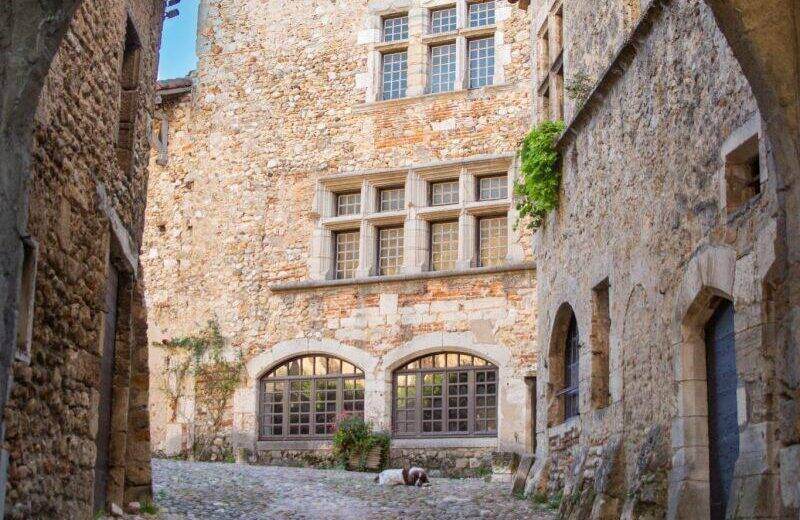
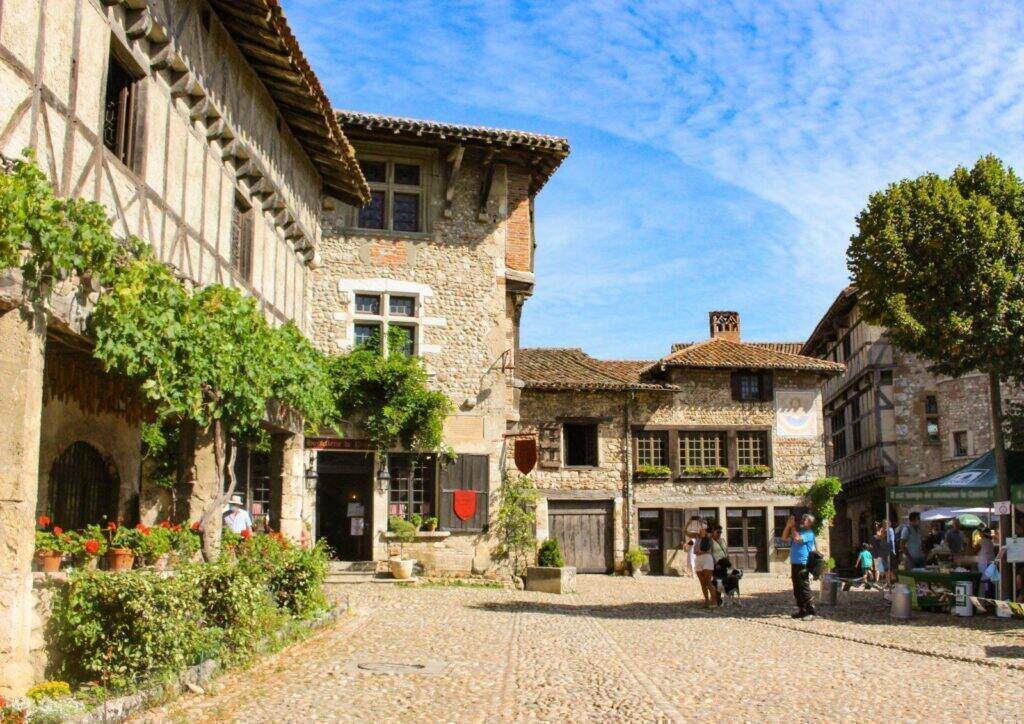
Start on the main cobbled street that runs through Old Pérouges to the Place de la Halle (Market Square): this is the vibrant heart of the village, with its half-timbered houses, stone facades, and medieval porches. Things to do there:
Museum of Old Pérouges: objects, costumes, and interpretive panels to understand daily life and urban history during the Middle Ages.
Place de la Halle and remarkable houses: observe the architecture of the 15th-17th century houses, the covered market hall, and the plaques that explain the history of local families.
Parish church: visit the medieval church (Saint-Sixte/Saint-Siège, depending on the information) to admire its architecture, furnishings, and stained-glass windows.
Ramforts and viewpoints: climb to the fortifications and viewpoints for a panoramic view of the Rhône Valley, the Bugey region, and the Lyon skyline on a clear day.
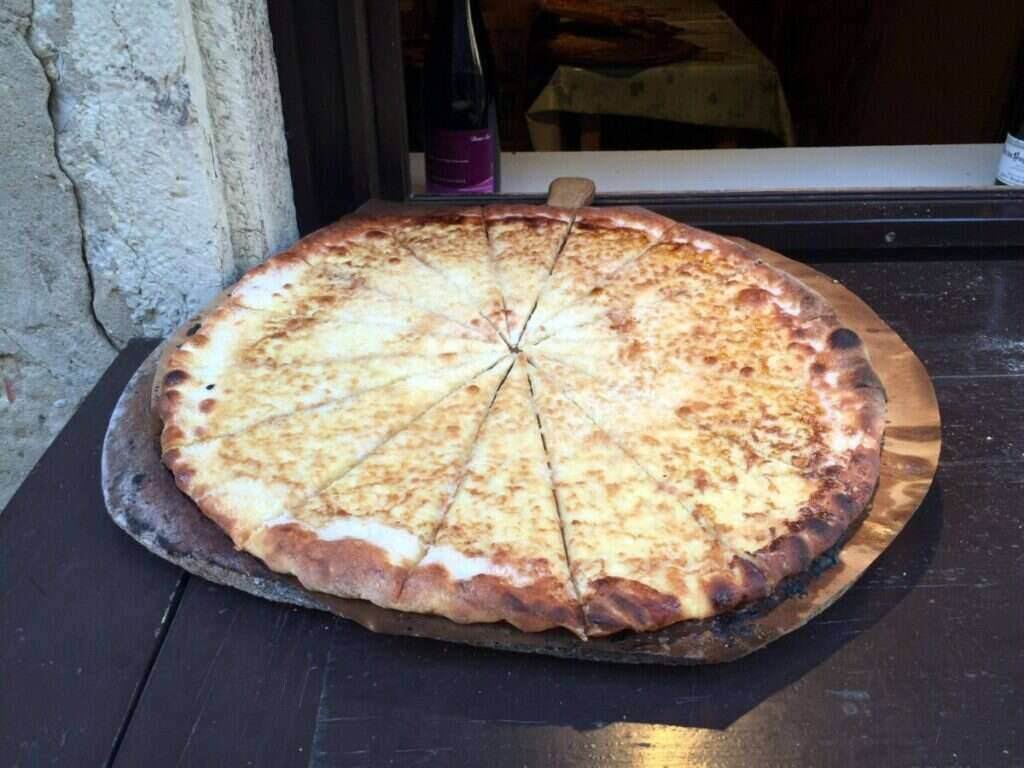
Local delights: Sample the famous Pérouges galette, a traditional sweet treat served warm in the village’s bakeries and restaurants.
Photography and leisurely strolls: The narrow streets, archways, and staircases offer exceptional photo opportunities at dawn or dusk, when the light sculpts the stone.
Guided tours and workshops: Contact the tourist office for themed guided tours (history, crafts, medieval garden) and family workshops, often organized outside of peak season.
Practical tips: Park in the peripheral parking lots (follow the signs) and avoid driving in Old Pérouges. Wear closed-toe shoes for the cobblestones and check the museum and shop opening hours with the tourist office.

The origin of the Pérouges galette!
The famous Pérouges galette is a culinary specialty that originated in the medieval town of Pérouges. This delicious galette, often referred to as a “sweet galette,” is an iconic pastry of the region and a testament to its rich culinary heritage.
The town of Pérouges, founded in the Middle Ages, was a thriving center of trade. The locals developed simple yet flavorful recipes, using local ingredients such as flour, butter, and sugar. Over the centuries, the Pérouges galette has evolved. Initially, it was likely made with basic ingredients to feed farmers and artisans. With time, more refined variations emerged, incorporating ingredients like cream or fruit. The galette is primarily made of shortcrust pastry, often enriched with a mixture of sugar and cream. Its crisp exterior and soft interior make it a beloved treat. The galette is typically baked until it reaches a beautiful golden color. Its light and airy texture, combined with a subtly sweet flavor, makes it an ideal pastry for an afternoon snack or dessert.
Pérouges has retained its medieval charm, and many of the town’s bakeries and pastry shops continue to produce the galette according to traditional recipes. This contributes to the preservation of this culinary heritage.
The Pérouges galette is much more than just a pastry; it reflects a rich culinary tradition and local expertise. Its popularity endures, attracting gourmets and curious visitors to this magnificent medieval town.
Where to eat and dine in Old Pérouges?
Hostellerie du Vieux Pérouges — Place du Tilleul
Specialty / Why go: Refined regional cuisine served in a historic setting. The restaurant highlights local products (Ain cheeses, honey, freshwater fish depending on availability) and offers a traditional version of the famous Pérouges galette for dessert. Elegant atmosphere, attentive service — ideal for an exceptional meal after exploring the village.
La Halle (Restaurant de la Halle) — Place de la Halle
Specialty / Why go: Regional dishes and daily specials typical of Bresse and Bugey in a friendly and central location. People come for generous portions, expertly prepared local products, and to dine on the terrace when the weather permits, overlooking the village life. Perfect for a quick lunch or a simple yet delicious dinner after a stroll.
L’Auberge du Château
Specialty / Why go: Home-style cooking, seasonal menu focused on local produce (meats, game depending on the season, traditional desserts like galette). Warm inn atmosphere in a historic setting — perfect for a cozy evening, generous portions, and a welcoming, family atmosphere.
Themed tours and cultural events
Medieval Trail: Introductory workshops, craft demonstrations, and historical reenactments during seasonal events.
Contemporary Arts: Temporary exhibitions and installations integrated into the heritage site, creating a contrast between old and new.
Music and performances: Intimate concerts and street theater that take advantage of the medieval setting for original programming.
Walks and hikes around Pérouges
Bugey Trails and viewpoints: Marked trails for easy to moderate hikes offering views of the plain and the distant Alps on a clear day. Take the trails that start from the village for a 1–3 hour walk.
Birdwatching and nature walks: For bird and botany enthusiasts, the surrounding wetlands and hedgerows are ideal for birdwatching in spring and autumn.
Mountain biking loop: Local routes suitable for mountain biking, alternating between farm tracks, woodland paths, and rural trails. Contact the tourist office for maps and difficulty levels.
Nearby excursions: Combine your visit with Bourg-en-Bresse, the Dombes region and its Bird Park, or a trip to Lyon for a cultural day out.
Themed hikes: Heritage trails that link viewpoints, fortification remains, and gardens (Hortulus) for an interpretation of the landscape and local history.

Two key events of the year
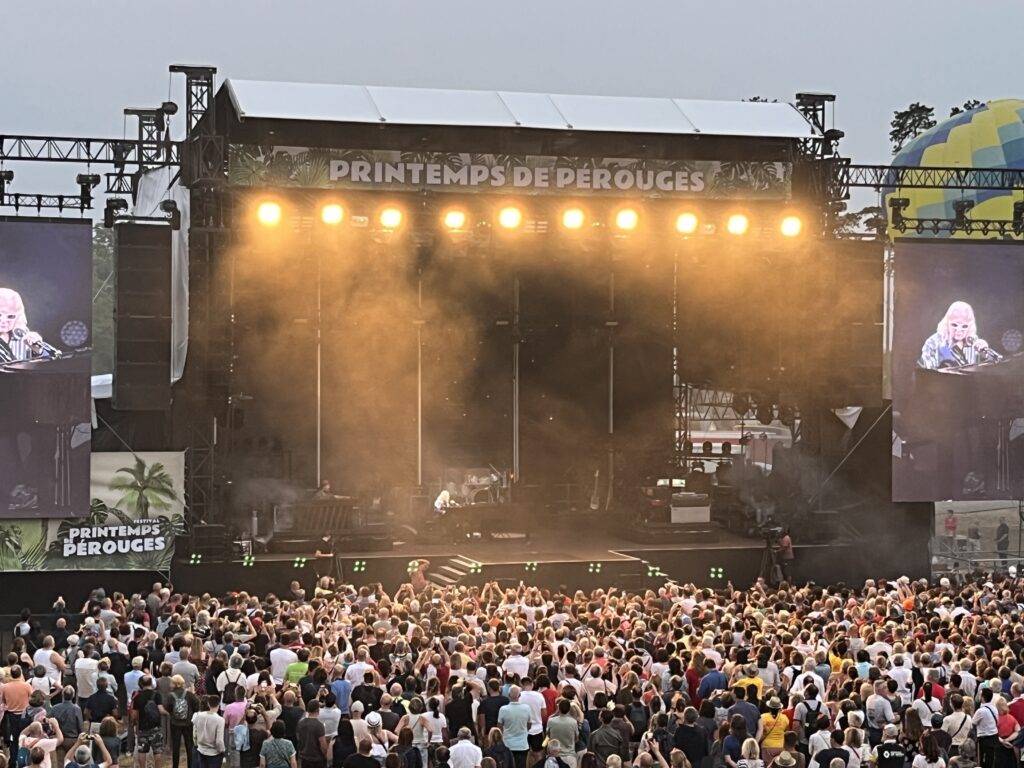
Pérouges Spring Festival
The Pérouges Spring Festival, near Lyon, has become a major cultural event in spring/summer throughout France: a diverse musical program (national and international artists), concerts in venues near the town, and outdoor stages. The festival generally takes place over several days and offers public ticketing, family-friendly programming, and themed stages. For each edition, consult the official festival website and the tourist office for specific dates, the complete program, venues (sometimes organized around the castle or in neighboring parks), and ticket information. Tip: some evenings are outdoors—bring warm clothing for the evening and arrive early for parking. Dates: June 23-26 in the park of the Château de Saint-Maurice de Rémens! Visit the website: https://www.festival-perouges.org/
The Pérouges Christmas Market!
The Christmas market takes over the medieval town at the end of the year, offering a warm and medieval atmosphere: artisan chalets, local produce, children’s activities, Christmas concerts, and sometimes parades or live nativity scenes. Located around the market hall and in the narrow streets, the market showcases local crafts (woodworking, textiles, pottery) and gourmet products (honey, jams, cheeses, and the festive Pérouges galette). Consult the tourist office for dates, opening hours, access, and parking information, as the event attracts a large number of visitors. Visit the website: https://www.perouges-pa.com/march%C3%A9-de-no%C3%ABl
Practical Information
Tourist Office: ask for guided tour schedules, maps, hiking trails, and event schedules. They also provide information on visitor parking and accessibility.
Parking: Peripheral parking areas are indicated at the village entrance; some areas may be subject to a fee or regulated during events.
Best seasons: Spring and autumn for light and tranquility; summer for festivals and events; hi
Go for the Christmas market atmosphere.
Whether you’re looking for a detailed heritage tour, a nature getaway, or a festive immersion during the Spring Festival or Christmas market, Pérouges offers a rare balance between historical preservation and a vibrant cultural program—plan ahead, consult the tourist office, and let yourself be swept away by the charm of Old Pérouges.

