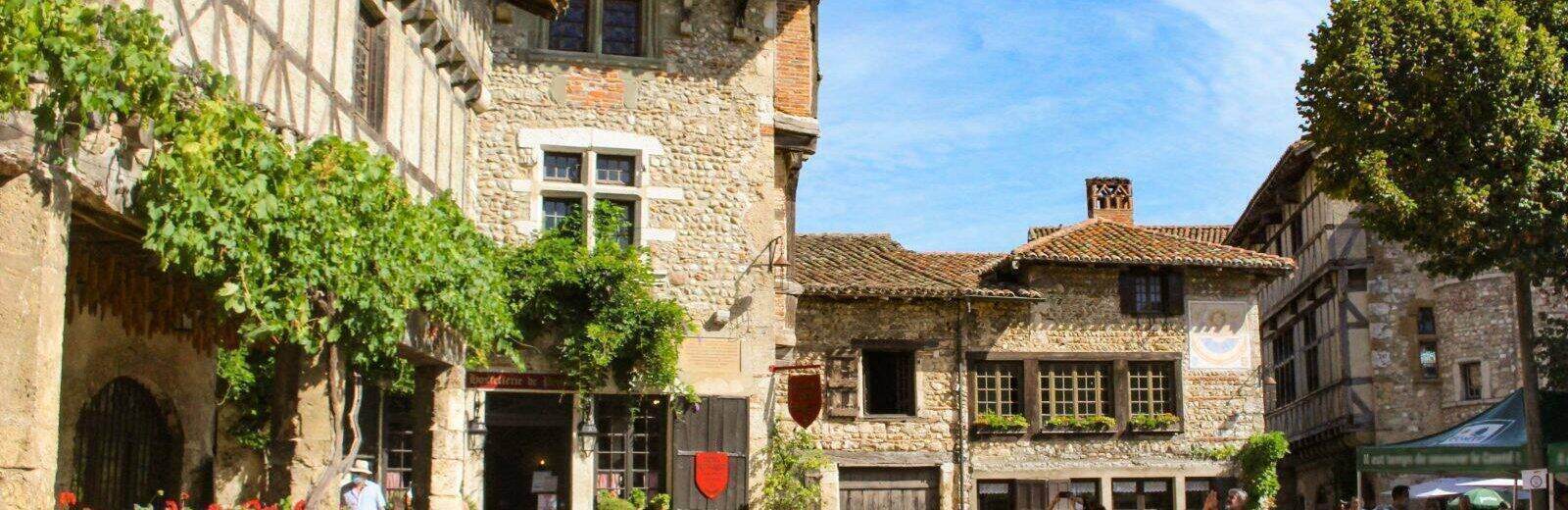
Pérouges medieval town
Pérouges: the most popular medieval town in the Ain region, frozen in the Middle Ages!
Nestled in the Ain department, the medieval town of Pérouges is a typical Dombes village, seemingly frozen in time. Timeless and meticulously preserved, Pérouges attracts 300,000 visitors annually, making it one of the region’s most popular destinations.

Where to eat (well) in the medieval town of Pérouges?
In Vieux Pérouges, good food goes hand in hand with local specialties! In the central square of this picturesque French village, the old houses and the large linden tree create the perfect atmosphere for savoring local delicacies. Whether you stroll near the medieval tower or take advantage of the convenient parking areas to stop for a few moments, every meal becomes a true experience in the heart of the region’s heritage.
Hostellerie du Vieux Pérouges: Delicious regional cuisine, homemade Pérouges galette, and a guaranteed historic ambiance!
Restaurant La Halle: Traditional menus, specialties from the Ain region, and local dishes!
Auberge du Château: A seasonal menu featuring local products.
These establishments often offer the famous Pérouges galette, a local sweet treat not to be missed! Remember to book in advance during peak season and check recent reviews on the tourist office or the village website.
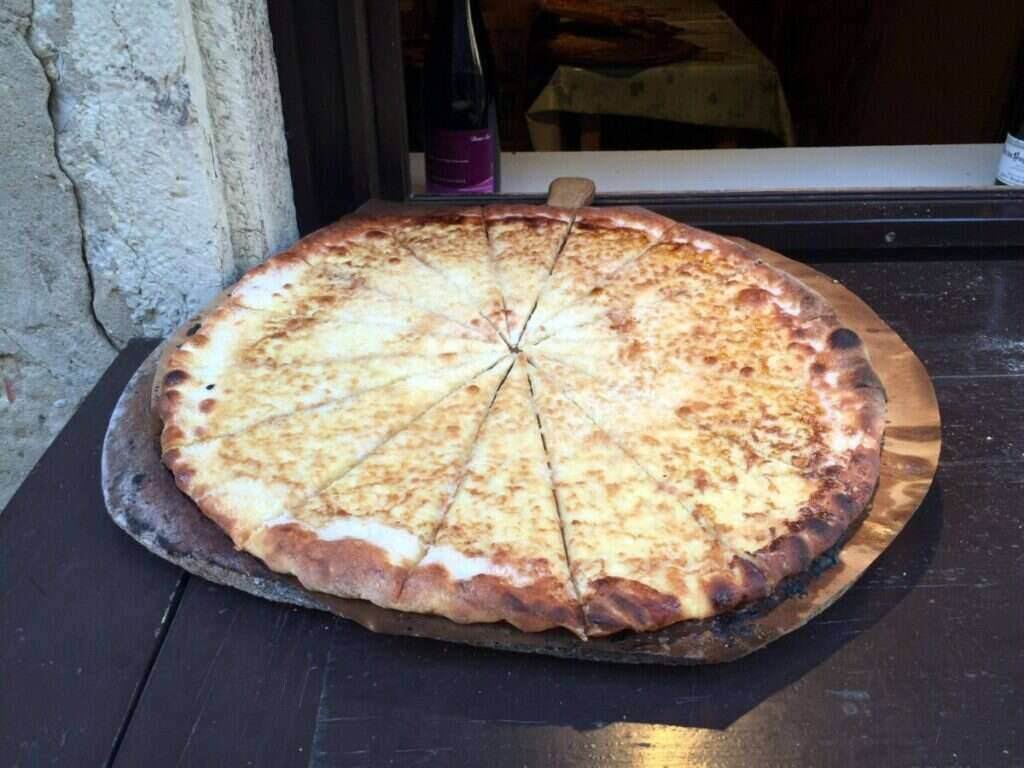
The Pérouges Galette: A Recipe That Has Become an Emblem
The Pérouges galette, now a must-try for any visitor, has a recent history deeply intertwined with the village’s revival. Inspired by an old local recipe, it was reintroduced in 1912 by Marie-Louise Thibaut at the Hostellerie du Vieux Pérouges. This leavened dough, filled with butter and sugar, quickly became the town’s emblematic specialty. Simple and convivial, it is part of the regional culinary tradition and continues to contribute to the village’s tourist appeal.
Why is Pérouges called Pérouges?
The history of Pérouges begins with a fascinating enigma: the very origin of its name. Several theories exist. Some historians associate it with the Italian city of Perugia, probably referring to Gauls who returned from Italy to found a new community. Other researchers favor a more local interpretation, linked to the “red stone,” a possible trace of an ancient place of worship or sacrifice. Whatever the version, this hazy origin still fuels the city’s legendary aura today and reinforces its identity, deeply rooted in a history spanning millennia.
Accommodation: Where to stay near the medieval city of Pérouges, or in the surrounding area in the Ain department?
You’ll find bed and breakfasts and guesthouses in the town and its surroundings! Hotels and inns nearby are ideal for extending your stay after visiting the village: the Hostellerie de Pérouges is the place to go for a medieval night!
Our tips for planning your visit!
Consult the map and information provided by the tourist office before your visit.
Book your restaurants and guided tours in advance during peak season, as it gets very busy! Take your time: a leisurely stroll is best enjoyed on foot, allowing you to soak up the atmosphere, read the plaques, visit the Old Pérouges Museum, and savor the famous galette.
Combine your visit with a trip to Bourg-en-Bresse or explore the Bugey Regional Natural Park to extend your weekend!

History buffs can also explore the connection between Pérouges and the painter Maurice Utrillo, whose work is exhibited at the Centre Pompidou. Utrillo, an iconic local figure, painted the Place du Tilleul (Linden Tree Square). Every street corner, every stone invites discovery, making visits to Pérouges unique, blending heritage, culture, and immersion in medieval Ain.
After a visit to Pérouges, you’ll quickly understand why this medieval town in the Ain department is now one of the most iconic villages in France. The town, often called Old Pérouges, charms visitors with its unspoiled atmosphere, its medieval church of Sainte-Marie-Madeleine—a veritable 15th-century fortress church—its central square beneath the market hall, its ancient village layout, and its stone houses that tell the story of a prince, a town, and a community that has stood the test of time.
Visitors are eager to consult every information panel, every historical monument, every medieval house, as well as the Old Pérouges Museum, the Old Pérouges Committee, and the spaces dedicated to contemporary art.
They also discover traces of the work of Édouard Herriot, mayor of Lyon, who supported the preservation of Old Pérouges, helping to save this medieval town in the Ain region. Around the Hostellerie du Vieux Pérouges, visitors can sample the famous Pérouges galette, which has become a culinary symbol of this French village. A short walk away, the Hortulus, the medieval garden at the foot of the town, offers a peaceful view of the Bugey region, while the Parc des Oiseaux (Bird Park) is just a few minutes from the village.
In spring, visitors flock to the town, taking advantage of the visitor parking areas, some of which are paid, to explore the town, enter the church, admire the castle, and follow the sloping alleyways that lead from the park to the village gates. The Pérouges Tourist Office welcomes numerous travelers each year from the Ain department, Bourg-en-Bresse, and all over France, seeking to rediscover this unique place that blends the Middle Ages, preserved heritage, local flavors, and modern creativity through its contemporary art museum.
Thus, Pérouges, a remarkable medieval town, remains a vibrant, authentic, and inspiring place: a town where every house, every square, every information panel, and every visit reminds us that history can be perfectly preserved while embracing contemporary art and modern tourism. It’s an unmissable destination for anyone wanting to experience the depths of time, amidst ancient ramparts, a fortified church, gastronomy, nature, and guided tours in the heart of the Ain department.

